
When you ask someone about their favorite sport, chances are they’ll say cricket or football. These two games capture the imagination of millions. But what makes them so compelling? In this article, we compare cricket and football in a lively, accessible way—exploring their histories, rules, culture, strategy, and appeal.
We’ll embed step‑by‑step guides, anecdotes, and SEO‑friendly keywords so the article is both readable and optimized. Let’s dive in.
1. Origins & History: Where These Sports Come From
🏏 The Story of Cricket
The roots of cricket stretch back centuries. Some scholars suggest that its earliest forms may have existed as early as the 13th century, when shepherds bowled stones or clumps of earth at a target. Encyclopedia Britannica+2study.com+2
The first definite written reference to a game called creckett appears in 1597, indicating that children were playing a bat-and-ball game in southeast England. origins.osu.edu
By the 17th century, cricket was becoming more organized. In 1646, a match was recorded in Kent (England). study.com+1 Then, in 1744, the first known version of written Laws of Cricket was drafted. NCSA College Recruiting+2origins.osu.edu+2 The Marylebone Cricket Club (MCC), established in 1787, took over the task of maintaining and revising those laws—and remains a key institution today. EBSCO+2Britain Express+2
The first Test match—the classic “long form” of the game—was held in 1877 between England and Australia. bgsuclubsports.com+2icc+2 Over time, ODI (One Day International) formats appeared (in the 1970s) and later T20 cricket, giving fans shorter, action-packed versions. bgsuclubsports.com+2origins.osu.edu+2
Today, cricket is governed globally by the ICC (International Cricket Council), which has over 100 member countries. Wikipedia+2icc+2
⚽ The Story of Football
Football (or association football, commonly called “soccer” in some countries) also has deep historical roots. Folk-style ball games existed long before modern codified rules. Encyclopedia Britannica+1
The modern game originated in 19th century Britain, as public schools codified rules and organized matches. footballhistory.org+3Encyclopedia Britannica+3Wikipedia+3 The first recognized football club, Sheffield FC, was founded in 1857. footballhistory.org
The rules evolved quickly. The Football Association (FA) in England formalized the laws of the game in 1863, distinguishing association football from rugby and other variants. Encyclopedia Britannica+1 The early passing style was developed around 1870 by teams like the Royal Engineers AFC. Wikipedia+1
Today, football is governed by FIFA (Fédération Internationale de Football Association), overseeing global competitions like the FIFA World Cup.
2. Basic Rules & How the Games Work
Though both are ball sports, cricket and football differ greatly in how they’re played.
⚽ Football Rules — A Quick Overview
- Two teams of 11 players (including a goalkeeper)
- Play with one round ball
- Match lasts 90 minutes, split into two 45‑minute halves
- Goal: get the ball into opponent’s net using mostly feet (except goalkeepers)
- The team with the most goals wins
- Draws are possible (or extra time/penalty shootouts in knockout matches)
Football’s strength lies in its simplicity: you can explain it in minutes, but mastering tactics is a lifetime’s pursuit.
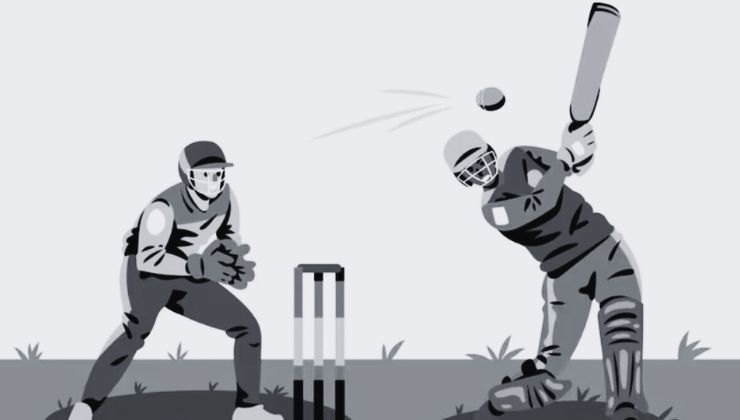
🏏 Cricket Rules — Simplified
Cricket is more complex, but here’s the gist:
- Two teams, 11 players each
- There are two roles: batting team and bowling/fielding team
- The batting side aims to score runs
- The bowling side tries to dismiss batters (get them out)
- Common match formats:
- Test matches — up to 5 days
- ODI (50 overs each side)
- T20 (20 overs each side)
A few key terms:
- Wicket — the three stumps and two bails; also refers to a batsman getting out
- LBW (leg before wicket) — a rule about being dismissed if the ball would hit the stumps
- Powerplay — in limited‑overs cricket, parts of the innings with fielding restrictions
- Boundary, six, four — ways to score
- Spin, pace, swing, seam — types of bowling
The full Laws of Cricket run dozens of pages—but the heart is: score more runs than the opposition.
3. Popularity & Reach: How Big Are These Sports?
🌍 Football: The World Game
Football is the world’s most popular sport, with an estimated 4+ billion fans across the globe. It thrives in Europe, South America, Africa, and Asia.
Its success comes down to accessibility: a ball and open field are often enough to start a game. Also, club leagues, continental tournaments, and the FIFA World Cup drive its massive global appeal.
🏆 Cricket: Deep Roots, Targeted Reach
Cricket is estimated to have 2.5+ billion fans, making it one of the top spectator sports. Its core markets include India, Pakistan, Australia, England, South Africa, Sri Lanka, the West Indies, and parts of Southeast Asia.
Because cricket grew under British colonial influence, it has deep cultural roots in former colonies. The explosion of T20 leagues (like the Indian Premier League (IPL)) has also broadened its reach.
4. The Mental Game: Strategy, Tactics & Skill
⚽ Football: Tactical Dance in Motion
In football, strategy shifts on a dime:
- Formations (e.g. 4-3-3, 3-5-2) define how you balance defense and attack
- You choose whether to press high or sit back
- Decide to attack via the flanks or through the middle
- Players adapt on the fly to injuries, substitutions, or momentum
A single misplaced pass or failed press can turn a match.
🏏 Cricket: Tactical Chess with a Bat
In cricket, every innings is a long chess game:
- You choose whether to open with spin or pace
- Decide when to attack vs defend
- Determine optimal powerplay timing
- Set fielders to block or encourage certain shots
- Manage run chases: when to push, when to consolidate
One over or one bad decision can change the entire match’s outcome.
5. Engagement & Entertainment: What Keeps Fans Hooked
⚽ Football Thrills
- Continuous action — no long breaks
- Goals create instant euphoria
- Penalties and extra time provide drama
- Rivalries like El Clásico (Barcelona vs Real Madrid) or Manchester Derby ignite passion
🏏 Cricket Drama
- A huge six or elegant boundary electrifies crowds
- Run chases keep tension until the last ball
- In Tests, days build drama through changing fortunes
- Iconic showdowns like Virat Kohli vs James Anderson or Ashes Series endure in lore
6. Culture, Identity & Emotion

🏏 Cricket as a Cultural Force
In countries like India, cricket is more than a sport—it’s part of identity.
I grew up in Mumbai during the 2011 World Cup final. Every neighbor, every TV screen, every household whispered the same hope: “Let Dhoni hit the winning run.” When he did, a collective roar rolled through the city. That moment was more than victory—it was collective euphoria.
Similarly, rivalries like India vs Pakistan become civilizational narratives, not just sports.
⚽ Football as Identity & Community
In Brazil, football is woven into life: samba rhythms, street games, and iconic players like Pelé become legends. In Liverpool, fans chant, sing, and live for Anfield nights. Clubs become extensions of neighborhoods.
In many countries, football shapes youth, politics, and media.
7. Business & Money: The Economy of Sport
💰 Football: A Global Powerhouse
- Global superstars like Lionel Messi and Cristiano Ronaldo earn massive salaries
- Clubs like Manchester United, Real Madrid, Barcelona are multi‑billion dollar brands
- Revenue streams include broadcasting rights, sponsorships, merchandise, matchday tickets
🏏 Cricket: Lucrative for Core Markets
- The IPL (Indian Premier League) is arguably the richest cricket league
- Top cricketers command premium endorsements
- In countries where cricket is king, cricket boards control major media revenues
8. Which One to Try First? A Beginner’s Plan
You don’t have to choose—try both. Here’s a step-by-step plan for beginners:
- Pick a format
- Football: local club or school league
- Cricket: try T20 for shorter gameplay
- Pick a team to root for
- E.g. FC Barcelona, Manchester United, Mumbai Indians, Chennai Super Kings
- Watch highlights online—great matches
- Play casually with friends—backyard match or futsal
- Follow a major tournament
- Football: FIFA World Cup, UEFA Champions League
- Cricket: ICC World Cup, IPL, T20 World Cup
This gives you insight into both games’ appeal.
9. Where the Worlds Cross
There are surprising overlaps:
- Some athletes excelled in both at junior levels (for example, AB de Villiers had talent in cricket, rugby, and football)
- Cricketers sometimes wear football kits, take part in charity football matches
- Stadiums like Old Trafford (Manchester) host both football and occasional cricket matches
- Fan crossover: many football fans also love the drama of cricket
10. Final Thoughts: Embrace the Best of Both
You don’t have to pick one side. Cricket and football are different but equally beautiful. One offers relentless pace, the other tactical depth. One reigns everywhere, the other holds emotional strongholds.
So when someone asks, “Are you a football or cricket fan?”—just say:
“I’m a fan of great sport.”
✅ Quick Comparison Table
| Origins | Modern in 19th‑century England Encyclopedia Britannica+1 | Late 16th‑century England Wikipedia+2Wikipedia+2 |
| Governing Body | FIFA (global) | ICC (global) |
| Standard Match Length | 90 minutes | Varies: T20 ~3 hrs, ODI ~8 hrs, Test up to 5 days |
| Core Appeal | Fast pace, continuous drama | Strategy, tension, changing momentum |
| Cultural Reach | Virtually global | Strong in former British colonies |
| Business Scale | Multi‑billion global industry | Huge in cricketing nations |