
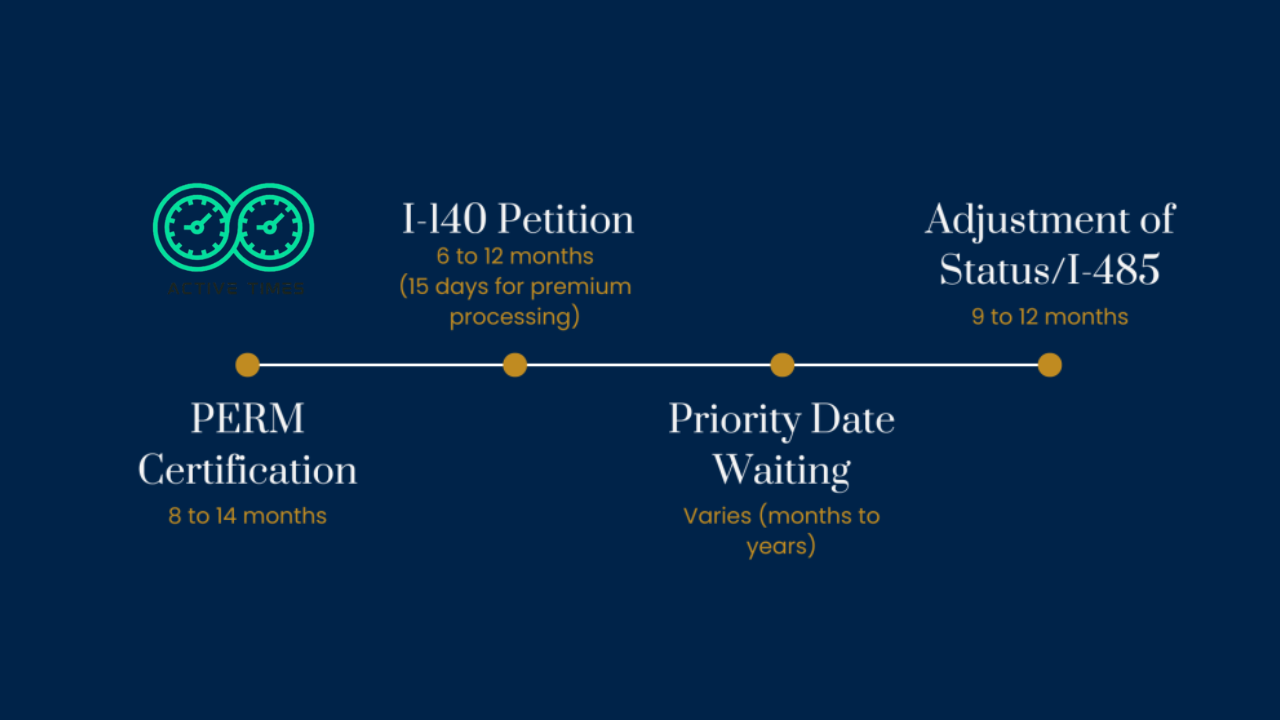
If you’re trying to get a U.S. green card through employment, the PERM timeline is something you absolutely need to understand. This process can be long and sometimes confusing. But don’t worry—we’ve broken everything down in this guide. From step-by-step instructions to the reasons for delays, you’ll find everything you need to know right here.
What Is the PERM Process?
The PERM process (short for Program Electronic Review Management) is the first step that an employer must take before sponsoring a foreign worker for a U.S. green card under the EB-2 or EB-3 visa categories. It is managed by the Department of Labor (DOL) and ensures that hiring a foreign worker won’t negatively affect U.S. workers’ job opportunities or wages.
In simple terms, your U.S. employer must prove that there are no qualified American workers available to do the job they’re offering you. They do this by going through several steps like job advertising, recruitment, and wage verification. Once the DOL approves the PERM application, your employer can then move forward with the immigrant petition (Form I-140).
How Long Does the PERM Process Take?
The PERM processing time can vary a lot depending on several factors. On average, the process can take 6 to 10 months, but in some cases, it could stretch to a year or more.
Here are some average timeframes:
- Prevailing Wage Determination (PWD): 6 to 12 weeks
- Recruitment Process: 2 to 3 months
- PERM Filing and Processing: 6 to 7 months
- If an audit is triggered: add 6 to 12 more months
This means that if everything goes smoothly, you might complete the PERM stage in about 10 months. But delays are not uncommon.
Step-by-Step PERM Timeline Breakdown
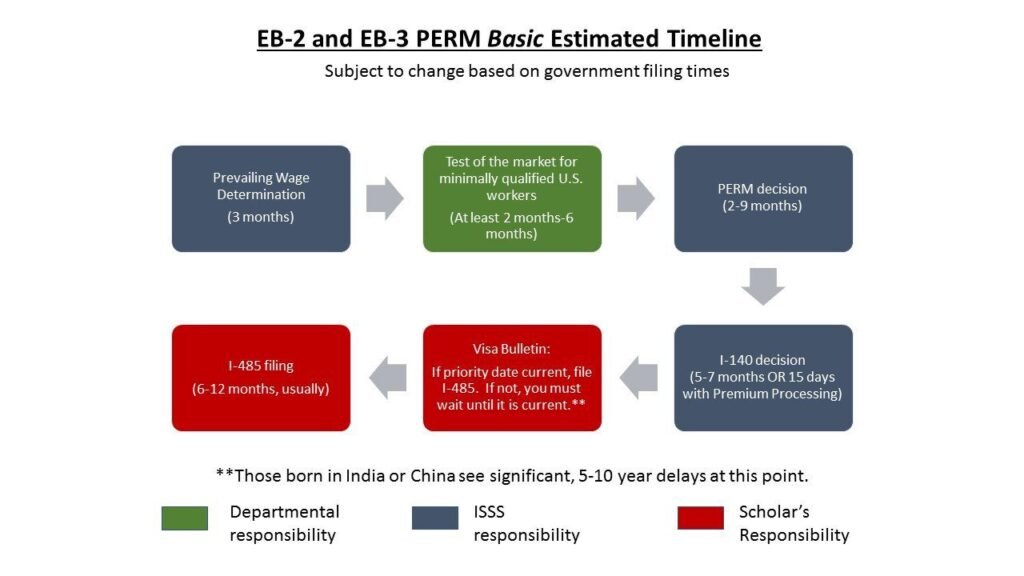
Understanding each stage in the PERM process helps you see where the time goes. Let’s break down the typical timeline step-by-step so you know what to expect.
Prevailing Wage Request (PWR)
The first step in the PERM process is getting a Prevailing Wage Determination (PWD) from the Department of Labor. This ensures the wage your employer is offering meets the minimum pay for that type of job in the area.
- Time Required: 2 to 3 months
- Why It Matters: If the wage is too low, the DOL will not approve the application. That’s why this step is crucial.
During this step, your employer submits information like job title, duties, and location. The DOL then reviews national wage data to determine the correct wage for your position.
If the employer accepts the wage, the process moves forward. If they disagree, they can request a redetermination, which can add even more time.
Job Advertisement
Once the wage is approved, your employer must advertise the job to prove that no qualified U.S. workers are available for the position.
- Time Required: Around 1 to 2 months
- Where They Advertise:
- Two Sunday newspaper ads
- A 30-day posting on the state workforce agency (SWA) website
- Internal posting at the job site
- Additional steps for professional roles (e.g., job fairs, recruitment websites, campus placement, etc.)
Each of these ads must follow strict DOL rules. For example, they must include the job title, duties, and requirements—and even small errors can lead to a denial or audit.
Recruitment Report
After the ads run, your employer must wait at least 30 days to review applications. Then they prepare a recruitment report.
- Time Required: About 30 to 45 days
- What It Includes: A summary of applicants and reasons why none were qualified or accepted the job
The employer needs to keep detailed records of all applicants. They must show a good faith effort to hire a U.S. worker if someone meets the minimum job requirements.
Once this is done, and there are no suitable U.S. candidates, the employer can file the ETA Form 9089, which is the actual PERM application.
What Happens After the PERM Is Approved?
Once your PERM application is approved, your employer can move forward by filing Form I-140, the immigrant petition. This step is managed by USCIS (U.S. Citizenship and Immigration Services), not the DOL.
If your priority date is current in the Visa Bulletin, you can also file Form I-485 to adjust your status and become a lawful permanent resident (green card holder).
This step depends on your country of origin, visa category, and whether the green card cap is full or not. If the cap is full, you’ll have to wait until your priority date becomes current.
Why PERM Processing Times Change
PERM processing times can vary depending on many things. Here are a few reasons why it might take longer than expected:
- High number of PERM filings at the DOL
- DOL staffing shortages or changes in policy
- Backlogs in wage determinations
- Time of year: More filings usually happen at the start of the year or fiscal year, causing longer queues
It’s important to regularly check the DOL processing time updates, which are usually posted monthly.
Common PERM Timeline Delays
Several issues can slow down or delay your PERM application. Understanding these can help you avoid problems.

DOL Audits
Sometimes the DOL randomly selects applications for an audit, or they may audit because something looks suspicious or incorrect. This can add 6 months or more to your timeline.
They may ask for more proof that your employer tried to hire U.S. workers. If you’re audited, your employer must respond quickly and accurately.
Incorrect Job Ads
One of the most common mistakes in PERM applications is improper job ads. Even small errors—like missing salary details, incorrect job duties, or failing to run the ad for the required amount of time—can cause big problems.
The DOL is very strict about this step. Mistakes can lead to denials or audits.
Prevailing Wage Issues
If the job duties are not clearly defined or if the employer disagrees with the wage assigned by the DOL, it can lead to redeterminations, appeals, or long delays.
This is why it’s so important to work with an experienced immigration attorney during the PERM process.
PERM Timeline vs H-1B Timeline
The H-1B visa and PERM labor certification are both employment-based immigration processes, but their timelines are very different.
- The H-1B process follows a strict annual cycle. If selected in the lottery, your H-1B visa can be approved within 4 to 6 months.
- The PERM process, on the other hand, is open year-round, but takes 8 to 12 months on average just for the labor certification stage.
Also, the H-1B is a temporary non-immigrant visa, while PERM is the first step toward a green card, which is permanent. Many H-1B holders start the PERM process to transition to permanent residency before their visa maxes out.
The Bottom Line
The PERM timeline can be long and sometimes unpredictable, but understanding each step can help you feel more in control. From Prevailing Wage Determination to recruitment to PERM filing, each stage is crucial for a successful green card application.
Always work with a qualified immigration attorney to avoid mistakes and delays. Keep track of your case, stay updated with DOL processing times, and prepare for the possibility of audits or additional documentation.
Even though the journey might seem long, every step brings you closer to living and working in the United States permanently. Stay patient, be prepared, and you’ll get there.