
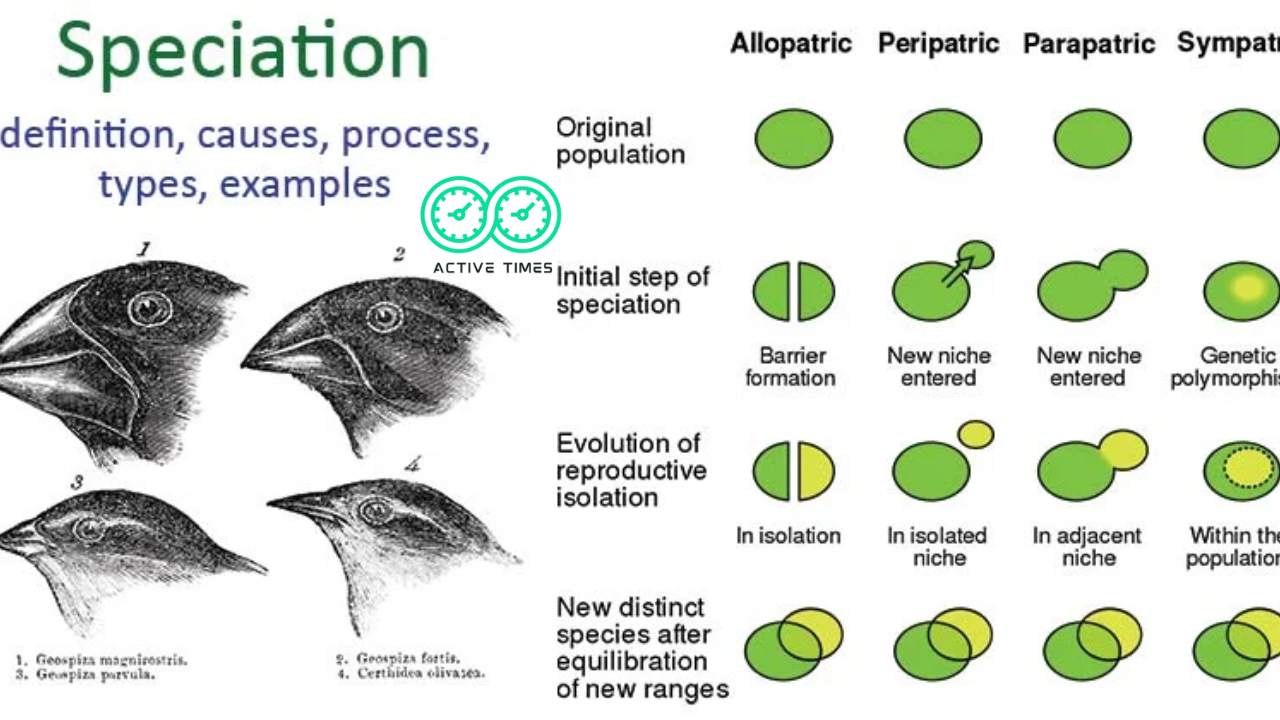
Speciation is the fascinating biological process through which new species of animals, plants, or even microorganisms are formed over time. It explains how life diversifies and evolves. From birds that sing different songs to flowers that bloom at different times, speciation is at the heart of how living organisms adapt, survive, and flourish across the planet.
What Is Speciation in Simple Words?
Speciation simply means the creation of new species. A species is a group of living things that can mate with each other and produce babies that can also grow up and have their own babies. But sometimes, a group from one species gets separated or starts to live differently. Over time, they slowly change and become so different that they can’t mate with the original group anymore. When that happens, they become a brand new species. This is what scientists call speciation. Imagine if a group of birds flew to a new island and stayed there for many years. They might start to look and behave differently from the birds back home. Eventually, they may become their own species with special feathers, songs, and habits. This process can take thousands or even millions of years, but it’s one of the main reasons the world has such an incredible variety of life.
Speciation can happen in many different ways and for many different reasons, but the end result is always the same: a new species is born that is different from its ancestors. It’s like nature’s way of trying new designs, helping living things to adapt to changes in their environment or explore new places.
Why Do New Species Form?
New species form because living things are always changing. These changes are called mutations, and they happen randomly in DNA. When the environment changes—maybe the climate gets hotter or colder, or there’s a new kind of food or predator—some animals or plants with certain traits survive better than others. These survivors pass their traits to their babies. Over time, if the changes continue and the two groups no longer interact or reproduce with each other, they become so different that they become two separate species. Sometimes, physical barriers like rivers, mountains, or oceans separate groups. Other times, the species just choose different lifestyles or live in different parts of the same area. Either way, the process of becoming so different that they can’t mix again is how speciation happens.
Environmental pressures, competition, and even love (or mate choice) can push one group of a species to become something totally new. This happens slowly but surely, generation after generation, until nature has created a brand-new life form.
Types of Speciation
There are a few main ways that new species are created, and scientists have given each of these processes a special name. The most common types of speciation are:
Allopatric Speciation
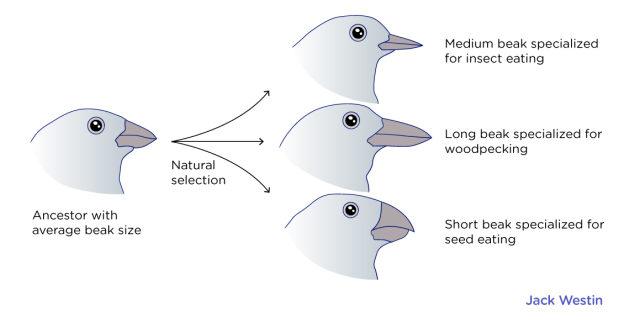
Allopatric speciation happens when a group from a species gets separated by a physical barrier like a mountain, desert, or body of water. Because they are isolated, they can no longer mate with the original group. Over time, both groups adapt to their new environments and develop different traits. Eventually, they become two separate species. For example, when a river changes course or a glacier forms, it can divide a population. The animals or plants on each side begin to evolve differently. A classic example is Darwin’s finches on the Galápagos Islands. Each island had its own finches, and because the birds couldn’t easily move from island to island, they developed different beak shapes and feeding habits over time.
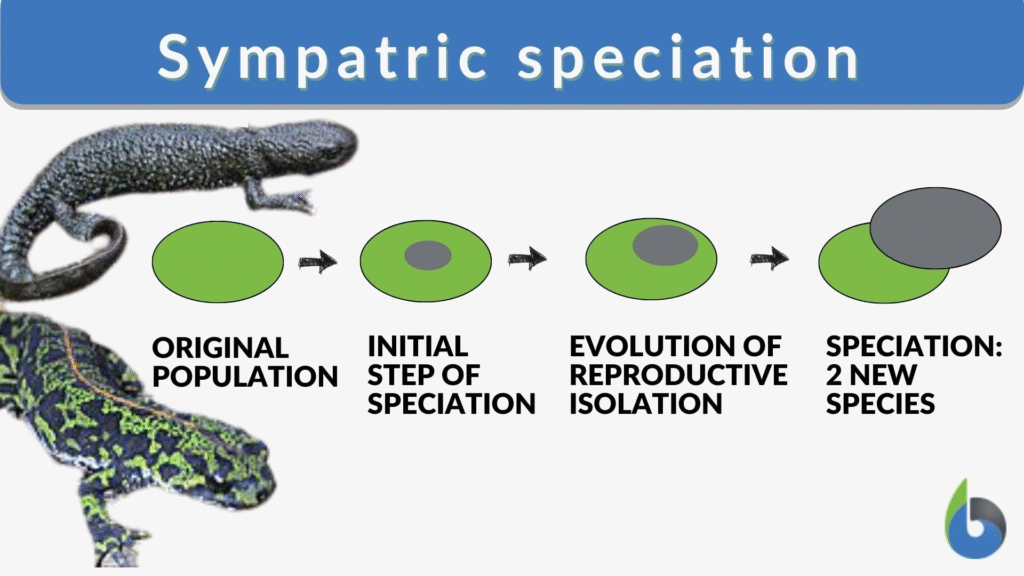
Sympatric Speciation
Sympatric speciation is different because it happens without any physical separation. Instead, new species form in the same area. This often happens because of changes in behavior, like when a group of insects starts to feed on a new kind of plant or prefers a different time of day to be active. If these changes keep the groups from mating with each other, they can become new species. Sympatric speciation is especially common in plants. Sometimes, plants double their number of chromosomes—a condition called polyploidy—and this can instantly create a new species that can’t mate with the original one. In animals, it’s rarer, but it still happens. For instance, fish in the same lake might start feeding at different depths, leading them to evolve separately.
Peripatric Speciation
Peripatric speciation is like a smaller version of allopatric speciation. A small group breaks away from the main population and moves to a new location, often at the edge of the original range. Because the group is small, it may experience something called a “founder effect,” where only a few genes are passed on. This can lead to fast changes in traits. The isolation and unique environment help speed up the creation of a new species. An example would be birds colonizing a small, isolated island. They face new challenges, like different food or predators, and these challenges push them to adapt quickly. Over time, this group may become a completely different species from the birds they originally came from.
How Does Speciation Work Step by Step?
Speciation usually follows a predictable path, even though it can take thousands or millions of years. First, something happens that separates one group from the rest. This could be a physical barrier or a behavior change. Next, the two groups live separately and face different environments. Mutations and natural selection cause the two groups to change in different ways. Over time, the differences grow until the groups can no longer breed with each other. At that point, they are considered different species. The process starts with variation—differences in genes within a population. Then, isolation prevents gene flow between the two groups. As they adapt to their environments, changes accumulate. Eventually, reproductive isolation becomes complete, and a new species is officially formed. This whole process is driven by evolution and natural selection, which help living things survive better in their specific environments.
Real-Life Examples of Speciation
One of the most famous examples of speciation is Darwin’s finches in the Galápagos Islands. These birds all came from a common ancestor but spread to different islands. Because each island had different food sources, the birds evolved different beak shapes. Some developed long, thin beaks to reach insects, while others had strong, thick beaks to crack seeds. Over time, they became different species. Another example is the apple maggot fly. Originally, these flies laid eggs on hawthorn trees. But when apples were introduced to North America, some flies started using them instead. The two groups now breed at different times and on different fruits. They are in the process of becoming separate species. In plants, a good example is wheat. Modern wheat is actually a hybrid of several ancient species that combined through polyploidy. This kind of speciation can happen almost instantly in plants.
What Causes Speciation to Happen?
Speciation doesn’t happen randomly. Several key factors trigger and drive the process. These include geographic changes, behavioral shifts, and even changes in how fast or slow a species reproduces.
Geographic Changes
Geographic changes are one of the most common causes of speciation. Earth’s surface is always changing. Mountains rise, rivers shift, glaciers form and melt, and landmasses drift apart. These changes can physically separate groups of animals or plants. Once separated, the groups experience different conditions—like climate, predators, or food. Over time, they adapt to these differences and become separate species. The formation of the Grand Canyon, for example, separated squirrel populations on either side. Over thousands of years, they evolved into different species with unique traits suited to their environments.
Behavior Changes
Sometimes species change how they act, which leads to speciation. Maybe they eat different foods, come out at different times, or pick different mates. These behavior differences can lead to reproductive isolation, meaning the groups no longer breed together. For example, in some species of frogs, males call at different pitches or times of night. Females prefer certain calls, so the groups don’t mix. Over time, these preferences can split one species into two. Even butterflies that lay eggs on different plants may eventually stop interbreeding, leading to new species.
How Long Does Speciation Take?
The time it takes for speciation to happen can vary a lot. In some cases, especially with plants, it can happen almost instantly due to genetic changes like polyploidy. But for most animals, it takes thousands to millions of years. The speed depends on many factors: how different the environments are, how fast the species reproduces, how strong the natural selection is, and how much genetic variation exists in the population. Small populations in new environments often evolve faster because changes have a bigger impact. In contrast, large populations in stable environments may change very slowly. While it may seem slow from a human perspective, in nature, speciation is always happening—just at its own pace.
Why Is Speciation Important for Life on Earth?
Speciation is crucial for the diversity of life. Without it, the world would be full of only a few types of plants and animals. Every new species adds more color, shape, and function to ecosystems. New species bring new ways of finding food, surviving predators, and helping their environments. Some clean the water, others pollinate flowers, and some even help control pests. Speciation also helps life adapt to a changing planet. When environments shift, new species may be better suited to survive and thrive. This process keeps nature strong and balanced. It’s one of the main reasons Earth is full of such a wide range of fascinating creatures—from tiny insects to giant whales.
The Bottom Line
Speciation is how life creates variety. It’s the natural process where new species are born from existing ones through separation, change, and adaptation. Whether it’s a bird finding a new home, a fish choosing a different depth, or a flower blooming in a new season, these small differences grow over time into something entirely new. Speciation explains why the world is filled with such amazing creatures and plants. It’s not just a scientific idea—it’s a story of life evolving and continuing. Even a 10-year-old can see its magic by watching birds, bugs, or even plants in their backyard. Every species around us has its own journey, and many are still changing. Nature is always at work, creating and evolving, thanks to the power of speciation.