
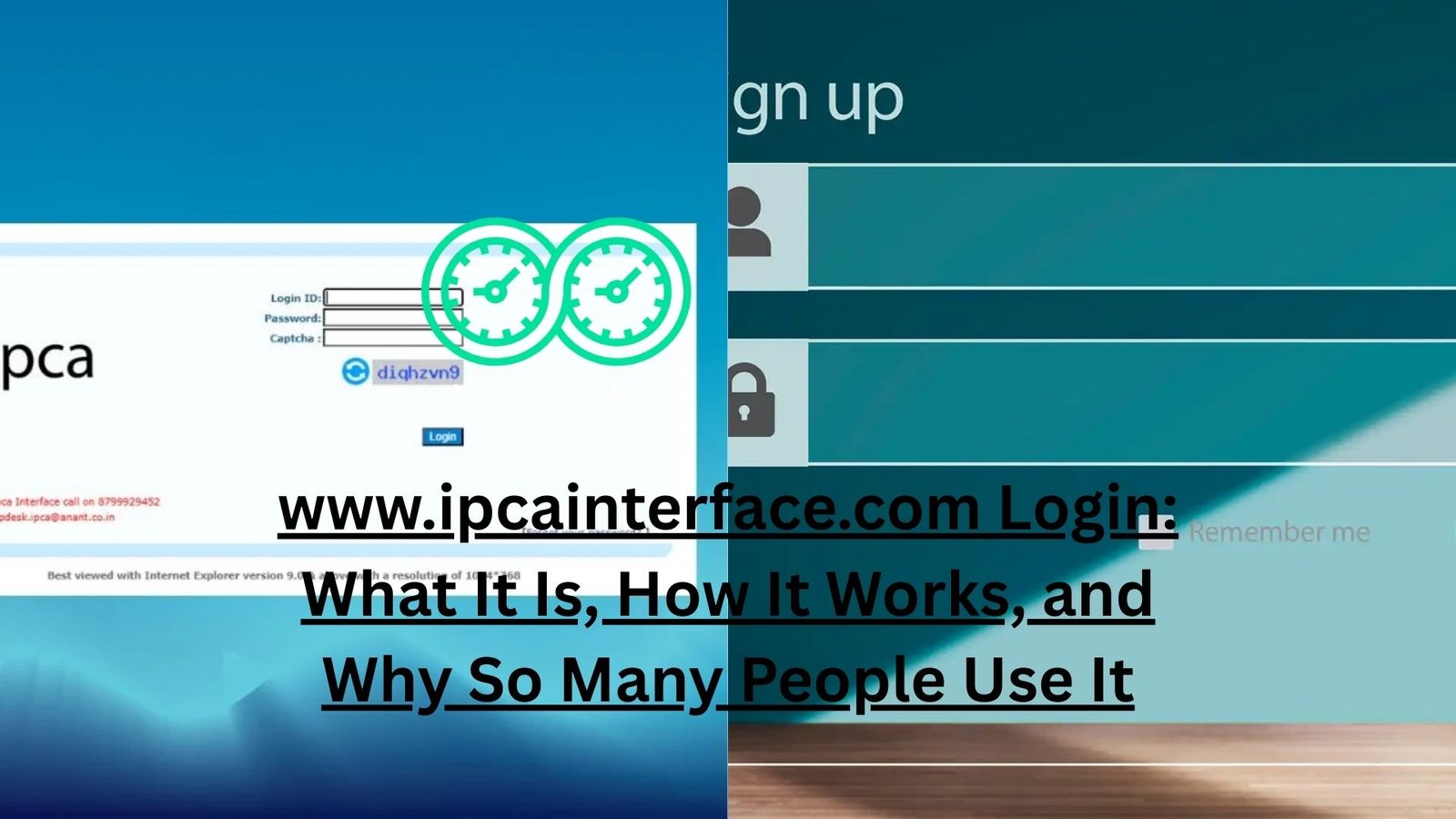
The first time someone hears about www.ipcainterface.com login, the reaction is usually the same: What exactly is it?
It sounds technical. Maybe even a little confusing.
But once you understand what the platform does and why people log in every day, it becomes much clearer. In fact, for many users involved in certain network-based programs, this site is simply part of their daily routine — like checking email or opening a work dashboard.
Let’s walk through what the site is, what happens after login, and why it has become a regular destination for a growing number of users online.
Understanding What ipcainterface.com Is
At its core, ipcainterface.com functions as a user portal.
Think of it as a digital control panel. People log in to view their account details, track activity, and manage different parts of their participation within the IPCA system.
If you’ve ever logged into a membership platform, investment dashboard, or affiliate portal, the idea is very similar. The login page simply acts as the gatekeeper. Once inside, users can access the tools and information connected to their account.
For many people, the site becomes part of a daily routine. Someone might check their dashboard in the morning the same way they check messages or notifications.
A quick login. A glance at updates. Then back to the rest of the day.
Nothing complicated — at least when everything works smoothly.
The Login Page: Simple but Important
The www.ipcainterface.com login page is straightforward.
You typically see two basic fields:
- User ID or username
- Password
That’s it.
No long forms. No complicated steps.
But here’s the thing — even simple login pages carry a lot of weight. They protect personal account information and keep the platform secure.
Imagine someone forgetting their password after not logging in for a few weeks. It happens all the time. Usually the solution is a password recovery option that sends reset instructions to the registered email.
Small step. Big relief.
Because without login access, the entire platform is basically locked away.
Why People Log Into ipcainterface.com
People visit the site for different reasons, depending on how they use the platform.
Some log in to check account balances or activity. Others monitor referral structures, transactions, or membership information.
A typical user scenario might look like this:
Someone wakes up, grabs coffee, opens their laptop, and types ipcainterface.com into the browser. Within seconds they’re inside the dashboard checking what happened overnight.
Maybe there’s a new update.
Maybe nothing changed.
Either way, the login gives them access to everything tied to their account.
And that kind of centralized access is exactly why platforms like this exist.
The Experience After Logging In
Once a user successfully completes the ipcainterface.com login, they land inside their account dashboard.
This area usually includes several sections showing account data and activity.
You might see:
Account summaries
Transaction records
Referral or network information
Profile settings
The exact layout can vary depending on updates or system changes, but the idea remains the same — everything is organized in one place.
Some users treat it like a quick status check.
Others spend more time exploring reports, analyzing numbers, or updating their information.
It really depends on how actively someone uses the platform.
When Login Problems Happen
Let’s be honest — login issues are part of the internet experience.
Even simple platforms occasionally cause frustration.
The most common problems people run into with ipcainterface.com login tend to be pretty ordinary:
Forgotten passwords.
Typing errors.
Browser issues.
Slow server response.
A surprisingly large number of login failures come from something as simple as caps lock being turned on. It sounds minor, but it happens constantly.
Another common situation involves saved passwords. A browser auto-fills an old password that the user already changed. Suddenly the login fails again and again until the person realizes what’s going on.
Not exactly dramatic, but definitely annoying.
Most of the time, refreshing the page, clearing the browser cache, or resetting the password solves the issue quickly.
Security Matters More Than People Think
Login portals often look basic, but behind the scenes they handle sensitive data.
That’s why security is such a big deal.
Good login systems rely on encrypted connections, secure password handling, and verification measures to protect accounts from unauthorized access.
Here’s a simple example.
Imagine someone logging into their account using public Wi-Fi at a coffee shop. Without proper security, that connection could expose login credentials. Secure platforms use encrypted connections to reduce that risk.
Users also play a role in security.
Strong passwords matter.
Reusing the same password across ten different websites? That’s never a great idea.
A surprising number of online account breaches start exactly that way.
A Quick Look at How People Discover the Site
Not everyone searches directly for www.ipcainterface.com login the first time.
Many people find it through referrals or through communities discussing the platform. Someone might send them the link or mention it during a conversation.
Then curiosity kicks in.
They open the page, see the login screen, and start exploring what the system actually does.
This discovery process is pretty typical for online platforms tied to network systems or membership programs. Word spreads through users themselves.
Not flashy marketing.
Just people sharing links.
The Importance of the Correct Login Link
One small but important detail is using the correct login address.
Typing errors or clicking random search results can sometimes lead users to unofficial pages or outdated links.
That’s why experienced users usually bookmark the official site after the first successful login.
It saves time and reduces the chance of landing somewhere misleading.
A bookmarked login page might seem like a tiny convenience, but over months or years of use, it becomes second nature.
Open browser.
Click bookmark.
Done.
Mobile Access and Changing Habits
Years ago, most people logged into platforms like this from desktop computers.
Now it’s a different story.
A lot of users access ipcainterface.com login from their phones.
Quick checks while commuting.
A glance at the dashboard during lunch.
Notifications checked between meetings.
Mobile browsing has quietly reshaped how people interact with web portals.
Instead of long sessions once a week, many users now make short visits several times a day.
Five seconds here.
Ten seconds there.
That behavior shift has influenced how modern login systems and dashboards are designed.
They need to load quickly and display clearly on smaller screens.
When Users Start Paying Attention to Details
At first, most users only care about getting inside the platform.
Login. Done.
But over time, people begin noticing more details.
They learn where the key features are located.
They understand how their dashboard updates.
They figure out what information actually matters.
The login page becomes just the front door.
The real value lies inside the account interface.
And that’s usually where users spend their time once they’re familiar with the system.
The Routine Nature of Logging In
After a while, logging into a platform like ipcainterface.com stops feeling like a task.
It becomes routine.
Almost automatic.
Think about how people check social media or email. The motion is nearly unconscious — open browser, type a few letters, press enter.
The same thing happens with account dashboards.
Users build habits around them.
And habits are powerful.
Once something becomes part of daily rhythm, it sticks.
Final Thoughts
The www.ipcainterface.com login page may look simple, but it serves an important purpose. It’s the entry point to a user’s account, data, and activity within the platform.
For regular users, it’s just a familiar doorway they pass through again and again.
Log in.
Check updates.
Review activity.
Move on with the day.
Nothing flashy. Nothing complicated.
Just a small part of the modern web experience — one login screen among thousands, quietly doing its job every single day.